
WiseAlt

C712ffdc2c3cff67b4fa7d293d7e085b65e32ffa2e111fa2bb3ef1b79d9495af

From Agent to Owner: How to Buy a Canadian MSB and Own Your Tech Stack

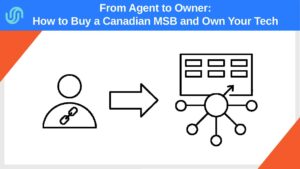
Illustration showing an agent icon transforming into a control dashboard connected to a gateway hub and multiple PSPs, representing the move from commissions to orchestration when buys Canadian MSB.

The traditional high-risk merchant account referral model has a glass ceiling. As an agent or ISO, you can introduce high-quality merchants to processors all day, but you remain at the mercy of the “upstream” provider. You cannot systematically control routing, partner performance, or the cascading logic that determines your approval rates. To break this cycle, the most strategic move for scaling an ISO business in 2026 is to move toward owning your payment stack for ISOs. By choosing to buy a Canadian MSB (Money Services Business) or other licensed entity (EMI/PSP) and pairing it with a proprietary gateway, you transition from a simple middleman to a full-scale platform owner. This guide serves as your ISO to PayFac transition guide, showing you exactly how to reclaim your margins and operational independence.

From Agent to Owner: How to Buy a Canadian MSB and Own Your Tech Stack Read More »

Selling an MSB / EMI / PSP: Why Bundling a Gateway Increases Valuation

Illustration of a deal package with license document, gateway diagram, and checklist plus a magnifying glass, representing buyer-ready MSB/EMI/PSP sales.

Selling an MSB, EMI, PSP or any payment processing assets sell faster when buyers can see a complete operating system—not only a legal entity. A license-only sale forces the buyer to rebuild integrations, routing rules, dashboards, logs, reconciliation, and access controls, which creates valuation drag and longer closing cycles. Bundling a payment orchestration gateway shifts the conversation from “paper” to “product”: you can demonstrate routing and cascading, operational reporting, and an audit trail. For MSB sellers targeting international buyers, it also helps answer the first diligence question: “Can we operate compliantly on day one?” For Canada-facing MSBs, the buyer will also look for evidence that registration and obligations are understood and that operational record keeping can be supported.

Selling an MSB / EMI / PSP: Why Bundling a Gateway Increases Valuation Read More »

Buy/Sell MSB or EMI/PSP with Payment Gateway as Resellable Payment Orchestration Stack

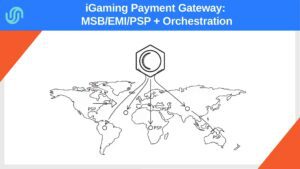
Illustration showing a license document connected to a payment gateway hub with multiple PSP/APM nodes, representing buy/sell MSB/EMI/PSP deal.

A high-risk payment gateway can turn an MSB or licensed EMI/PSP transaction from a “license-only handover” into a scalable, resellable payments business. Buyers don’t just want a legal wrapper—they want a working operating engine: routing, cascading, reporting, logs, and a clear onboarding workflow that can survive audits and partner due diligence. This matters across three groups: (1) MSB/EMI sellers and resellers who want higher liquidity and valuation, (2) agents and ISOs moving beyond commission-only models into payment orchestration or Merchant of Record, and (3) enterprise iGaming operators managing many PSPs/APMs across multiple geographies. In short: the gateway is the product layer you can monetize, improve, and eventually sell as a complete business.

Buy/Sell MSB or EMI/PSP with Payment Gateway as Resellable Payment Orchestration Stack Read More »

PayPal card processing USA: cards-only setup for EU projects, requirements, limits, and how to Improve US authorization rate

diagram: EU project → cards-only via PayPal (word in italics, not a logo) → US map; AVS/3-D Secure, BIN routing USA, approval

Scope. This guide covers accepting cards via PayPal only (no wallets) for EU-registered projects selling to US payers. You’ll learn what the setup is, what PayPal and partners check, which industries it fits, and how to squeeze more approvals with smart retry logic US issuers and hygiene. So, you will learn about PayPal card processing USA.

PayPal card processing USA: cards-only setup for EU projects, requirements, limits, and how to Improve US authorization rate Read More »

Cross-border declines US cards: causes, fixes, and routing that actually works

flowchart: US card → EU acquirer (cross-border, X) vs US acquirer (domestic, ✓); AVS ZIP, retry logic, Pay by Bank (Plaid/ACH).

A European online project gets a rush of US buyers… and approvals sag, i.e. cross-border declines US cards: causes, fixes, and routing that actually works. That’s the classic cross-border decline pattern: the issuer sees “US cardholder → non-US merchant/acquirer,” becomes stricter, and says no. The cure isn’t one trick—it’s better data, smarter retry logic US issuers, and (when warranted) local routes or US-native rails.

Cross-border declines US cards: causes, fixes, and routing that actually works Read More »