Home » iGaming Payment Processing

iGaming Payment Processing

Content on iGaming payment processing for regulated online casino, sportsbook, and lottery operators. We cover card acquiring (MCC 7995), APMs by region (SEPA/Open Banking, Trustly/Sofort/Klarna, PIX/boletos, UPI, wallets), smart routing & cascading to raise approval rates, 3DS2/SCA decisioning and exemptions, rolling reserves/volume caps, chargeback/friendly-fraud playbooks, KYC/KYB & AML/KYT, sanctions/geofencing, age/ID checks and responsible-gaming flows. Also: payout rails and reconciliation, multi-acquirer orchestration, descriptor strategy, and regulator notes (MGA/UKGC/Curaçao/EU PSD2).

Authoritative outbound resources about iGaming Payment Processing:

iGaming Payment Gateway: MSB/EMI/PSP + Orchestration for Routing, Cascading and Multi-PSP Control

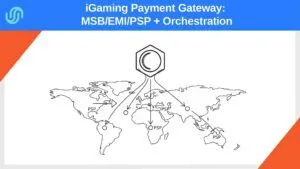
Illustration with a simplified world map, gateway hub, and payment flows showing cascading across multiple PSP nodes, representing iGaming multi-geo orchestration.

An iGaming payment gateway strategy often fails when it becomes “PSP sprawl”: too many dashboards, fragmented risk rules, inconsistent retries, and limited visibility across geographies. Payment orchestration solves this by putting routing, cascading, limits, and unified reporting under one control layer. For enterprise iGaming, the key is not adding yet another provider; it’s building a governance model that can measure performance, switch traffic quickly, and preserve audit trail across partners and payment methods. In the EU, authorization and registration expectations under PSD2 and related EBA guidance influence how payment institutions should present their controls and processes.

iGaming Payment Gateway: MSB/EMI/PSP + Orchestration for Routing, Cascading and Multi-PSP Control Read More »

From Agent to Owner: How to Buy a Canadian MSB and Own Your Tech Stack

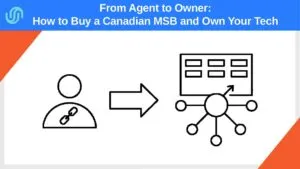
Illustration showing an agent icon transforming into a control dashboard connected to a gateway hub and multiple PSPs, representing the move from commissions to orchestration when buys Canadian MSB.

The traditional high-risk merchant account referral model has a glass ceiling. As an agent or ISO, you can introduce high-quality merchants to processors all day, but you remain at the mercy of the “upstream” provider. You cannot systematically control routing, partner performance, or the cascading logic that determines your approval rates. To break this cycle, the most strategic move for scaling an ISO business in 2026 is to move toward owning your payment stack for ISOs. By choosing to buy a Canadian MSB (Money Services Business) or other licensed entity (EMI/PSP) and pairing it with a proprietary gateway, you transition from a simple middleman to a full-scale platform owner. This guide serves as your ISO to PayFac transition guide, showing you exactly how to reclaim your margins and operational independence.

From Agent to Owner: How to Buy a Canadian MSB and Own Your Tech Stack Read More »

Selling an MSB / EMI / PSP: Why Bundling a Gateway Increases Valuation

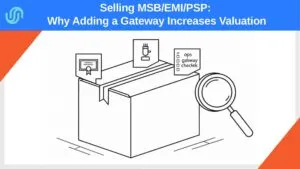
Illustration of a deal package with license document, gateway diagram, and checklist plus a magnifying glass, representing buyer-ready MSB/EMI/PSP sales.

Selling an MSB, EMI, PSP or any payment processing assets sell faster when buyers can see a complete operating system—not only a legal entity. A license-only sale forces the buyer to rebuild integrations, routing rules, dashboards, logs, reconciliation, and access controls, which creates valuation drag and longer closing cycles. Bundling a payment orchestration gateway shifts the conversation from “paper” to “product”: you can demonstrate routing and cascading, operational reporting, and an audit trail. For MSB sellers targeting international buyers, it also helps answer the first diligence question: “Can we operate compliantly on day one?” For Canada-facing MSBs, the buyer will also look for evidence that registration and obligations are understood and that operational record keeping can be supported.

Selling an MSB / EMI / PSP: Why Bundling a Gateway Increases Valuation Read More »

Telegram Payments in iGaming: How a €300K Case Scaled Successfully

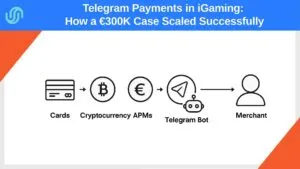
Telegram payments flowchart showing cards, crypto, and APMs processed through a Telegram bot to the merchant.

Telegram payments are becoming a critical growth driver for iGaming merchants. With over 900 million monthly users worldwide [Statista], Telegram has evolved from a simple messenger into a powerful ecosystem for commerce, payments, and even regulated industries like iGaming. Recently, a European iGaming merchant approached WiseAlt with a challenge. Their project was running entirely in Telegram, generating more than €300,000 per month in deposits, but payment acceptance was unstable.

Telegram Payments in iGaming: How a €300K Case Scaled Successfully Read More »

Betting Payment Methods that Increase Conversions in iGaming

Infographic of modern betting payment methods in iGaming including crypto, PIX, mobile wallets, and cards.

In the high-stakes world of iGaming, user experience at checkout can make or break conversion rates. Frictionless deposits, local options, and mobile-native flows are no longer optional — they are essential. Reports suggest that optimizing betting payment methods can boost deposit conversions by 20–40%, especially in competitive markets like Brazil, India, and Southeast Asia.

To stay ahead, operators must understand evolving iGaming payments, including crypto rails, real-time bank transfers, and emerging wallets. Forex and gambling share similar payment challenges — and many solutions are built to address both.

Betting Payment Methods that Increase Conversions in iGaming Read More »

Gambling PSP: Best Payment Gateway Solutions for Casinos, Betting, and iGaming Platforms

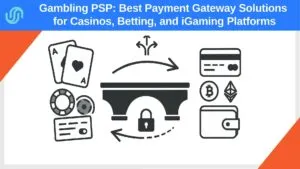
Illustration of a payment gateway bridge connecting gambling symbols like cards and chips with payment methods including credit cards and cryptocurrencies on a white background

In the fast-moving world of online casinos, sports betting, and real-money games, payments are the first bet your user places. If the deposit fails, the game never begins. And yet, many gambling platforms still rely on outdated, limited, or unscalable payment setups. Due to high chargeback risks, fraud exposure, and regulatory restrictions, gambling is considered a high-risk vertical — meaning most mainstream PSPs either refuse service or offer poor support. In this article, we explore the best gambling PSP solutions, what to look for in a casino payment gateway, and how to design a payment strategy that actually converts — across geographies, payment methods, and risk levels.

Gambling PSP: Best Payment Gateway Solutions for Casinos, Betting, and iGaming Platforms Read More »

White Label PSP: How to Build a Branded Payment Gateway Without Writing Code

Illustration of branded payment gateway setup using no-code tools in a white label PSP environment

Want to launch your own payment gateway, offer acquiring to clients, or embed payments into your product — but don’t have the dev team (or budget) for it? The good news: you don’t need to build it from scratch. With a white label PSP model and a modern no-code payment gateway platform, you can go live in weeks — not years — and focus on scaling your business, not coding infrastructure.

In this article, we’ll explain how you can start offering branded payment services without hiring engineers, and what to look for in a SaaS gateway platform built for high-risk or niche use cases.

White Label PSP: How to Build a Branded Payment Gateway Without Writing Code Read More »