Home » API Integration for Payment Systems

API Integration for Payment Systems

Guides on API integration for payment systems: REST/JSON endpoints, SDKs, and webhooks for core flows (auth, capture, refund/void, payout), tokenization & vaulting, 3DS/EMV 3-D Secure, idempotency keys, retries/backoff, HMAC signatures and webhook verification, versioning, and observability (logs, alerting).
We cover gateway vs. orchestration layers, multi-acquirer routing, reconciliation via reports/webhooks, and PCI DSS scope reduction (card-data minimization, SAQ types). For high-risk merchants (iGaming, FX/CFD, adult, crypto), we highlight onboarding constraints, risk flags, velocity checks, and failover strategies to keep approval rates stable under stricter controls.

Authoritative resources (outbound) related to API Integration for Payment Systems:

Selling an MSB / EMI / PSP: Why Bundling a Gateway Increases Valuation
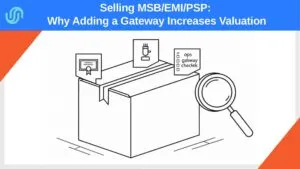
Illustration of a deal package with license document, gateway diagram, and checklist plus a magnifying glass, representing buyer-ready MSB/EMI/PSP sales.

Selling an MSB, EMI, PSP or any payment processing assets sell faster when buyers can see a complete operating system—not only a legal entity. A license-only sale forces the buyer to rebuild integrations, routing rules, dashboards, logs, reconciliation, and access controls, which creates valuation drag and longer closing cycles. Bundling a payment orchestration gateway shifts the conversation from “paper” to “product”: you can demonstrate routing and cascading, operational reporting, and an audit trail. For MSB sellers targeting international buyers, it also helps answer the first diligence question: “Can we operate compliantly on day one?” For Canada-facing MSBs, the buyer will also look for evidence that registration and obligations are understood and that operational record keeping can be supported.

Selling an MSB / EMI / PSP: Why Bundling a Gateway Increases Valuation Read More »