Home » Global Payment Acceptance

Global Payment Acceptance

This Global Payment Acceptance category covers issues related to accepting international payments, supporting multi-currency transactions, and challenges faced by merchants when expanding into global markets.

This category also guides to geo-specific payment solutions: how to win approvals and stay compliant by tailoring rails, APMs and routing to each region. We cover local vs cross-border acquiring, 3DS/SCA rules, FX/MCP, sanctions/geofencing, payout rails, and onboarding nuances for high-risk (iGaming, betting, FX/CFD, adult, crypto). Region playbooks include:

  • EU/EEA & UK: SEPA/SCT Inst, Open Banking (PIS/AIS), iDEAL/Payconiq/Swish/Blik/Bizum; GDPR/PSD2.

  • USA/Canada: Cards, ACH/eCheck & RTP; EFT (CA).

  • LATAM: Pix, boletos, SPEI, PSE, local acquiring.

  • APAC: UPI (IN), PayNow (SG), FPS (HK), PromptPay (TH), DuitNow (MY), QRIS (ID), JP/KR wallets.

  • MENA/GCC: mada (SA), KNET (KW), BenefitPay (BH), UAE local rails & wallets.

  • Africa & South Africa: M-Pesa & mobile money.

Suggested outbound resources (authoritative) about Global Payment Acceptance and GEO-Specific Payment Solutions:
European Payments Council (SEPA) • EBA (PSD2/SCA) • NPCI (UPI) • Banco Central do Brasil (Pix) • HKMA (FPS) • Bank of Thailand (PromptPay) • Bank Negara Malaysia (DuitNow) • PayNow SG • Saudi Payments (mada) • Safaricom (M-Pesa)

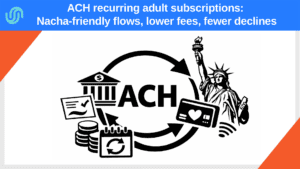
ACH recurring adult subscriptions: Nacha-friendly flows, lower fees, fewer declines

Illustration of ACH recurring payments for adult subscriptions in the USA with a recurring cycle, bank transfer icons

For adult and dating merchants in the U.S., card acquiring is usually the primary rail—but ACH recurring adult subscriptions can be a smart secondary rail for certain segments: lower fees, fewer “card expired” failures, and sometimes better long-term retention.

The key is doing it in a Nacha-friendly way, with clear authorization language, mandate storage, and returns management.

ACH recurring adult subscriptions: Nacha-friendly flows, lower fees, fewer declines Read More »

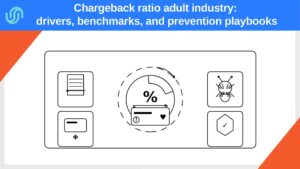
Chargeback ratio adult industry: drivers, benchmarks, and prevention playbooks

Diagram illustrating chargeback ratio in adult and dating payments with prevention icons for refunds, descriptors, fraud, and protection

In adult and online dating, chargebacks are not just “a cost.” They directly impact MID stability, reserves, approval rates, and whether acquirers will keep you live. Card network acquirers and merchants to implement stronger controls—Visa VAMP unifies key fraud + dispute signals into a single ratio, and Mastercard monitors excessive chargebacks at MID level. This guide explains what actually drives chargeback ratio in adult/dating industry and how to reduce them without killing conversion.

Chargeback ratio adult industry: drivers, benchmarks, and prevention playbooks Read More »

Dating Payment Processing USA (Legal Businesses)

Illustration of adult and dating payment processing in the USA, showing compliance, secure payments, and subscription billing

If you run a legal adult or online dating business and need Dating Payment Processing USA especially U.S. domestic acquiring, you’re in a different category than standard e-commerce. Mainstream PSPs may work at launch, but many merchants eventually face reviews, restrictions, or shutdowns—especially with subscriptions.

This page is your U.S. entry point: what U.S. acquirers typically require, how to prepare your underwriting pack, and how to build a backup plan that keeps you live.

Dating Payment Processing USA (Legal Businesses) Read More »

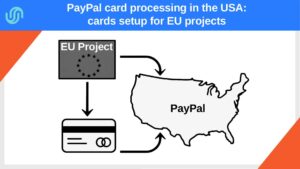
PayPal card processing USA: cards-only setup for EU projects, requirements, limits, and how to Improve US authorization rate

diagram: EU project → cards-only via PayPal (word in italics, not a logo) → US map; AVS/3-D Secure, BIN routing USA, approval

Scope. This guide covers accepting cards via PayPal only (no wallets) for EU-registered projects selling to US payers. You’ll learn what the setup is, what PayPal and partners check, which industries it fits, and how to squeeze more approvals with smart retry logic US issuers and hygiene. So, you will learn about PayPal card processing USA.

PayPal card processing USA: cards-only setup for EU projects, requirements, limits, and how to Improve US authorization rate Read More »

Cross-border declines US cards: causes, fixes, and routing that actually works

flowchart: US card → EU acquirer (cross-border, X) vs US acquirer (domestic, ✓); AVS ZIP, retry logic, Pay by Bank (Plaid/ACH).

A European online project gets a rush of US buyers… and approvals sag, i.e. cross-border declines US cards: causes, fixes, and routing that actually works. That’s the classic cross-border decline pattern: the issuer sees “US cardholder → non-US merchant/acquirer,” becomes stricter, and says no. The cure isn’t one trick—it’s better data, smarter retry logic US issuers, and (when warranted) local routes or US-native rails.

Cross-border declines US cards: causes, fixes, and routing that actually works Read More »

Multi-Provider Payment Gateway: Reducing Declines with Smart PSP Orchestration

Illustration of a high-risk payment gateway with smart PSP orchestration showing card, warning icon, and security shield on a monitor.

Declined payments are more than a technical glitch — they’re lost conversions, frustrated users, and lower LTV. In high-risk industries like iGaming, dating, crypto, and Forex, decline rates can easily exceed 30%, especially when relying on a single PSP. That’s why leading merchants are adopting multi-provider payment gateway architectures powered by smart PSP orchestration platforms. These systems intelligently route transactions, apply fallback logic, and monitor performance — all with one goal: decline rate optimization.

In this article, we show how to reduce failed payments using orchestration strategies and real-world routing logic, without rebuilding your stack.

Multi-Provider Payment Gateway: Reducing Declines with Smart PSP Orchestration Read More »

Crypto Merchant Services: How to Select the Best Payment Provider

Infographic with icons representing crypto merchant segments such as Web3, DeFi, VASP, crypto wallets, staking, and consulting

At WiseAlt, we’ve seen too many crypto businesses get burned by choosing the wrong crypto merchant services and payment provider. One Web3 client had their IBAN frozen overnight — no warning, no appeal. The reason? “Crypto no longer fits our risk appetite,” said their bank. That single decision put their entire operation on pause.

Whether you’re launching a DeFi platform, managing a centralized exchange, offering staking, or consulting in blockchain, payment infrastructure isn’t just a back-end concern — it’s the bloodstream of your business. Our team put together this guide to help you avoid common pitfalls and choose a provider who won’t disappear when it matters most.

Crypto Merchant Services: How to Select the Best Payment Provider Read More »

The Articles in this Category: