
High-Risk Payment Processing for Online Businesses
Arrange High-Risk Payment Processing for iGaming, Crypto, Dating, CBD, Forex in USA, Europe and other GEO.
Cards | Crypto | ACH | SWIFT | SEPA | Local APMs
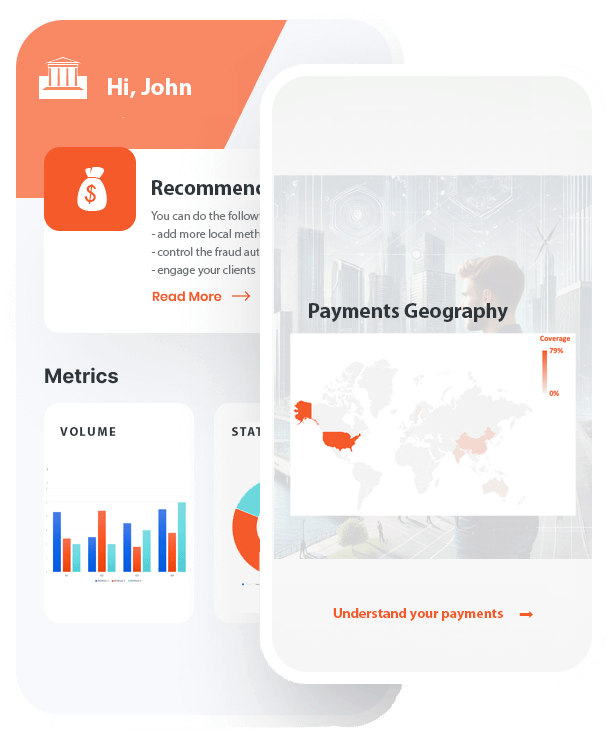
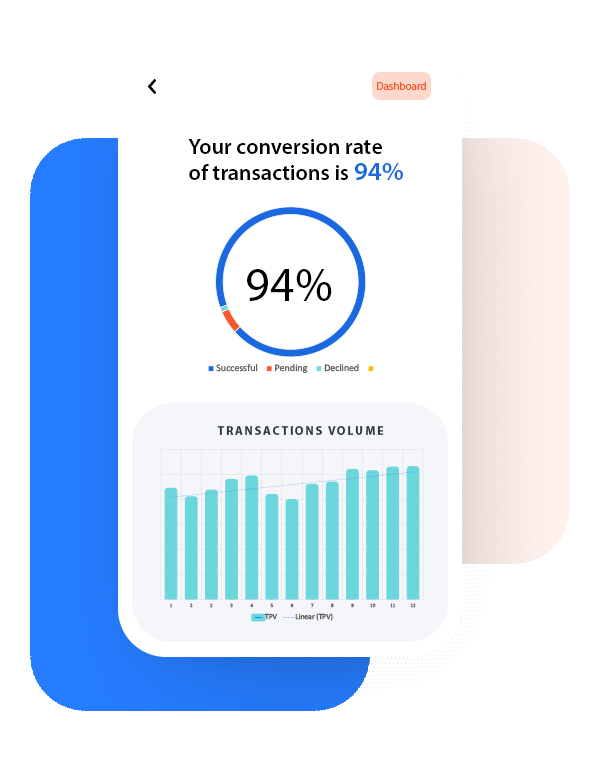
High-risk payment processing refers to acquiring and payment infrastructure designed for businesses with elevated operational or underwriting exposure. Payment providers may classify a business as high-risk because of recurring billing, high chargeback ratios, cross-border activity, industry restrictions, or regulatory complexity.
Being categorized as high-risk does not automatically mean a business is illegal or non-compliant. In many cases, the classification simply reflects higher monitoring requirements and stricter acquiring controls.
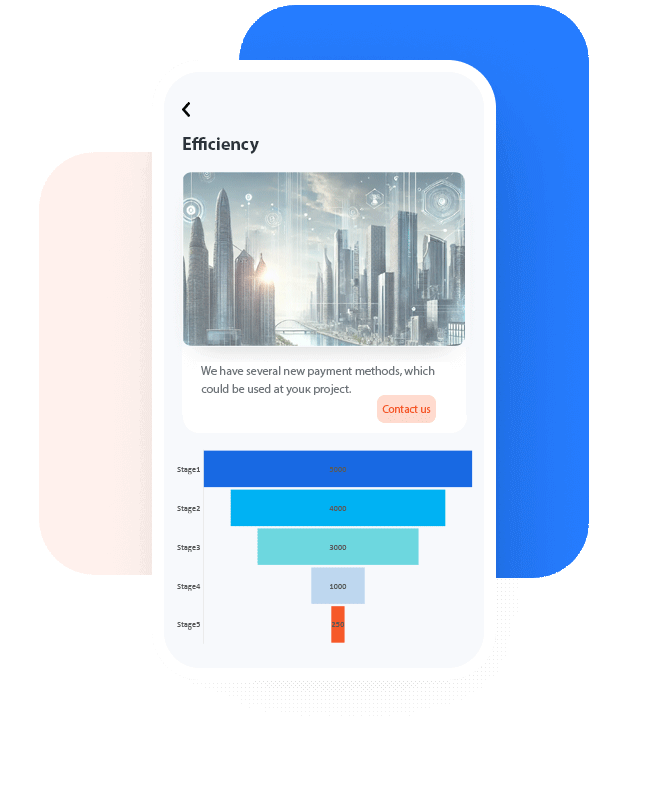
A high-risk merchant account is an acquiring relationship designed for businesses operating in elevated-risk industries or payment environments. These merchant accounts often involve stricter underwriting reviews, rolling reserves, ongoing monitoring, and enhanced fraud controls.</p>
The approval process may include business verification, website review, billing-flow analysis, fulfillment review, and assessment of prior processing history.
Businesses operating in industry-specific sectors may also require specialized underwriting approaches, such as adult and dating payment processing or CBD payment processing.
A high-risk payment gateway is the technical layer responsible for transaction routing, recurring billing logic, tokenization, authentication, and fraud monitoring.
For many high-risk businesses, payment stability depends not only on merchant account approval, but also on how the payment gateway manages retries, subscription continuity, decline handling, and processor migration flexibility.
Businesses relying on recurring billing or subscription models should also maintain infrastructure that supports backup routing and provider diversification.
For merchants with complex risk profiles, WiseAlt can also provide Payment Infrastructure Due Diligence to assess PSP dependency, gateway flexibility, reserve exposure, chargeback risk, recurring billing controls and backup-route readiness before scaling, changing providers or entering new markets.
- Online dating and subscription platforms
- CBD and nutraceutical businesses
- Travel and booking services
- Forex and crypto-related services
- Subscription-based online businesses
- Cross-border digital services
- High-risk eCommerce models
Many high-risk businesses operate internationally and therefore face additional acquiring complexity. Payment providers may apply different underwriting standards depending on merchant geography, customer location, product category, and settlement structure.
Businesses targeting U.S. customers often require different payment strategies than merchants operating primarily in Europe, LATAM, or APAC markets.
High-Risk Payment Processing FAQ
A business may be classified as high-risk because of recurring billing, elevated chargeback exposure, regulatory complexity, cross-border activity, or industry-specific acquiring restrictions.
Payment processors and acquiring banks evaluate operational and underwriting risk when deciding how to onboard merchants. Businesses with recurring billing models, elevated dispute ratios, international transactions, or compliance-sensitive industries often require enhanced monitoring and specialized payment infrastructure.
Industries that frequently require high-risk payment processing may include subscription-based online businesses, online dating platforms, CBD and nutraceutical merchants, travel services, forex-related businesses, digital subscription platforms, and other businesses with elevated underwriting or recurring billing exposure.
In many cases, yes. High-risk businesses often require specialized merchant accounts with enhanced underwriting, reserve structures, and ongoing monitoring.
Yes, but international processing may require additional acquiring relationships, localized payment methods, and region-specific underwriting structures.
Depending on geography and business model, high-risk merchants may use cards, ACH, SEPA, SWIFT, local alternative payment methods, crypto-friendly gateways, and recurring billing infrastructure designed for subscription businesses.
Rejections may occur because of industry restrictions, insufficient processing history, elevated dispute exposure, unsupported geographies, or compliance concerns.
A business may be classified as high-risk because of recurring billing, elevated chargeback exposure, regulatory complexity, cross-border activity, or industry-specific acquiring restrictions.
Payment processors and acquiring banks evaluate operational and underwriting risk when deciding how to onboard merchants. Businesses with recurring billing models, elevated dispute ratios, international transactions, or compliance-sensitive industries often require enhanced monitoring and specialized payment infrastructure.
Industries that frequently require high-risk payment processing may include subscription-based online businesses, online dating platforms, CBD and nutraceutical merchants, travel services, forex-related businesses, digital subscription platforms, and other businesses with elevated underwriting or recurring billing exposure.
In many cases, yes. High-risk businesses often require specialized merchant accounts with enhanced underwriting, reserve structures, and ongoing monitoring.
Yes, but international processing may require additional acquiring relationships, localized payment methods, and region-specific underwriting structures.
Depending on geography and business model, high-risk merchants may use cards, ACH, SEPA, SWIFT, local alternative payment methods, crypto-friendly gateways, and recurring billing infrastructure designed for subscription businesses.
Rejections may occur because of industry restrictions, insufficient processing history, elevated dispute exposure, unsupported geographies, or compliance concerns.